
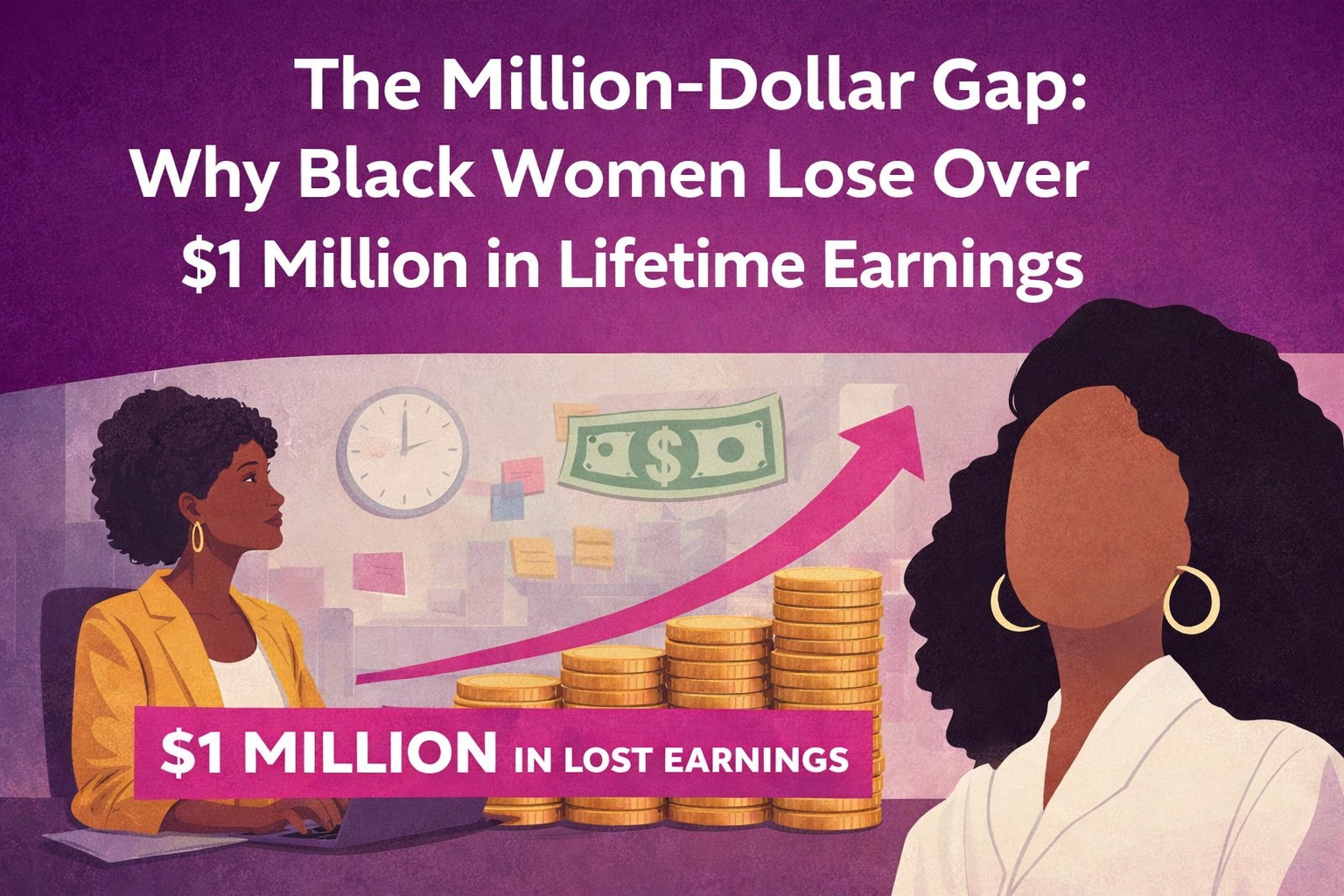

Over the course of a 40-year career, a Black woman working full-time year-round is projected to lose more than $1 million in earnings compared to her white male counterparts. This statistic highlights a deeply rooted economic inequality shaping families and communities worldwide.
The gender pay gap is widely discussed, but the intersection of race and gender creates an even wider and more persistent divide.
Understanding the $1 Million Loss
This loss represents decades of smaller disparities compounding over time:
- Lower starting salaries
- Slower wage growth
- Limited promotions
- Occupational segregation
- Reduced wealth-building opportunities
Even minor salary differences early in a career multiply through raises, investments, and retirement savings.
Why the Gap Exists
Occupational Barriers
Black women remain overrepresented in undervalued but essential sectors such as caregiving and service industries.
Bias and Discrimination
Unconscious bias affects hiring, promotion decisions, and salary negotiations.
Leadership Access
Limited mentorship and advancement pathways slow career progression and reduce earning potential.
The Motherhood Penalty
Working mothers frequently experience income penalties and reduced workplace flexibility.
The Real Cost Beyond Salary
Lower earnings impact wealth accumulation, retirement security, and community economic growth. Closing the gap is not only about fairness — it strengthens economies.
Why This Matters Now
- Higher employee retention
- Greater innovation
- Stronger workplace culture
- Improved public trust
Equality is not only ethical — it is strategic.
Moving Toward Economic Equity
The million-dollar gap is measurable — and solvable. Addressing pay equity unlocks economic potential for individuals, businesses, and societies alike.

Siphosemusa explores social impact, economic empowerment, and contemporary issues shaping African communities and global conversations.